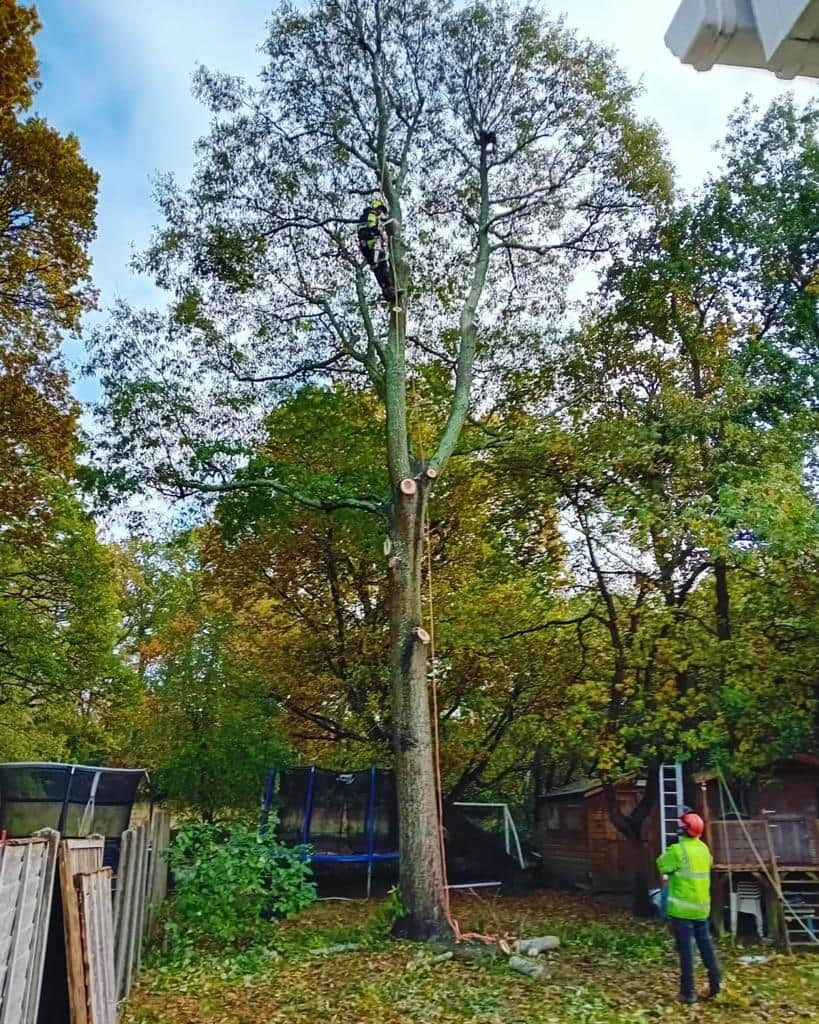
Trees can be valuable features in a garden, providing character, shade and natural screening. As they mature, however, their branches may extend towards roofs, walls, sheds, driveways and other areas that were once well clear of the canopy.
Professional tree surgery can help manage this growth before it begins to cause avoidable problems. For property owners in Harlow, Essex, a careful assessment can identify branches that require attention while preserving the tree’s health, stability and natural appearance wherever possible.
Managing Trees Around Buildings and Garden Features
Tree surgery is not simply about making a tree smaller. The work should respond to the tree’s species, condition, structure and position. A professional tree surgeon can determine whether pruning, crown reduction, crown lifting, deadwood removal or another form of management is appropriate.
Creating Clearance Around Roofs and Walls
Branches growing close to a building can rub against roof coverings, fascias, guttering and walls during windy conditions. Leaves and small twigs may also accumulate in gutters, affecting the movement of rainwater.
Selective pruning can create a suitable gap between the canopy and the building. Rather than removing branches indiscriminately, the cuts should be positioned carefully to retain a balanced crown and reduce the likelihood of weak regrowth.
Removing Dead or Defective Branches
Deadwood can develop naturally as a tree matures, but larger dead branches may eventually break away. Cracked, decayed or poorly attached limbs can present similar concerns, particularly when positioned above patios, paths, outbuildings or frequently used parts of the garden.
Professional tree surgery allows these branches to be identified and removed in a controlled manner. This reduces the amount of unstable material in the canopy without unnecessarily cutting healthy growth.
Managing Long, Overextended Limbs
Some branches extend much further than the rest of the crown and carry considerable weight towards their ends. When these limbs grow over a roof, greenhouse, fence or driveway, their position deserves careful assessment.
Suitable reduction work can shorten selected branches back to appropriate growth points. This redistributes weight and creates additional clearance while maintaining a more natural branch structure than harsh cutting or topping.
Protecting Sheds, Greenhouses and Garden Structures
Garden buildings are often placed near established trees, where falling deadwood or heavy lateral growth may become an issue. Even smaller branches can damage delicate greenhouse panels or roofing materials if they repeatedly make contact.
Targeted pruning can create space around these structures. Where access is restricted, branches may need to be removed in carefully controlled sections to prevent them from falling onto surrounding features.
Keeping Paths and Driveways Accessible
Low branches can obstruct paths, entrances and driveways or make it difficult to use the space beneath a tree. Growth may also reduce visibility when entering or leaving a property.
Crown lifting removes selected lower branches to increase the clearance below the canopy. The amount removed must be proportionate to the tree, as excessive lifting can affect its appearance and place additional strain on the remaining crown.
Reducing Excessive Shading and Debris
A dense canopy may heavily shade patios, lawns and planting areas. It can also deposit substantial quantities of leaves and small branches onto roofs, decking and other garden surfaces.
Selective thinning or reduction may improve light penetration and airflow. However, removing too much foliage at once can stress the tree and encourage vigorous regrowth. A measured approach is therefore important.
Why the Whole Tree Should Be Assessed
A branch close to a building may appear to be the only concern, but its relationship with the rest of the tree must be considered. Its removal could alter the crown’s balance, expose previously sheltered branches or create a large wound.
A professional assessment should examine the trunk, main unions, branch condition and overall canopy before work begins. This helps ensure that the chosen method addresses the practical issue without creating another structural weakness.
The Importance of Controlled Work
Branches located above buildings and garden features cannot always be allowed to fall freely. Professional tree surgeons can dismantle them progressively, using appropriate cutting and lowering techniques where required.
This controlled approach is especially valuable in confined gardens where roofs, fences, planting and hard landscaping leave little room for error. It also allows work to be planned around the features that need protecting.
Conclusion
Professional tree surgery can protect nearby buildings and garden features by creating clearance, removing deadwood, managing overextended branches and improving access beneath the canopy. The most effective approach is based on a proper assessment of both the tree and its surroundings.
If a tree is growing too close to an important part of your property, Harlow Tree Surgeons can assess the situation and recommend suitable work. Contact our team in Harlow, Essex, to arrange professional tree care tailored to your garden.
Call us on: 01279 969 199
Click here to find out more about Harlow Tree Surgeons
Click here to complete our contact form and see how we can help with your tree care needs.